Lawn Care, Fertilization and Weed Control in Georgia
Dealing with weeds, thin turf, or a lawn that keeps struggling through Georgia's summers is frustrating, especially when you've already spent time and money on products that don't hold. At Green Cycle Landscape Management Inc., we take the guesswork out of lawn care with a 7-step program built for Georgia's grass types and growing conditions.
Our team of local turf professionals handles seasonal fertilization, pre-emergent and post-emergent weed control, disease monitoring, and year-round adjustments to keep your lawn healthy from one season to the next. Whether you manage a residential property or a commercial business, we build a program around your turf's actual needs.
Here's what our Lawn Care service includes:
- Seasonal fertilization (7 applications, January through December)
- Pre-emergent and post-emergent weed control
- Lawn disease and fungus monitoring
- Soil pH monitoring and lime treatments
- Year-round lawn health assessments and service notes
Stop spending time guessing at what your lawn needs. With 23 years of experience treating Georgia lawns, Green Cycle Landscape Management Inc. delivers results that hold.

Take Control of Your Lawn This Season
Are you tired of patchy grass and recurring weeds no matter what you try? Green Cycle Landscape Management Inc. offers a straightforward approach to building the thick, healthy lawn you want, without the guesswork or long-term commitments.
Our No-Nonsense 7-Step Lawn Care Process
We've developed a targeted plan to address the specific challenges Georgia lawns face through every season:
- Free in-person lawn inspection and assessment
- Customized treatment schedule based on your grass type and conditions
- Seasonal fertilization applications timed to Georgia's growing seasons
- Pre-emergent and post-emergent weed control on the right calendar
- Disease and fungus monitoring with proactive treatment as needed
- Ongoing service notes and adjustments after every visit
Our technicians understand Georgia's grass types, soil conditions, and weed spectrum. We build a program around what your lawn actually needs, not a generic schedule applied to every yard the same way. No contracts, no guessing, just consistent care with clear communication after every visit.
We Stand Behind Every Treatment
At Green Cycle Landscape Management Inc., we believe you should see real results from your lawn care program, and if you don't, we come back and fix it. Every full-program customer receives free retreatments if weeds or issues return between scheduled visits, no questions asked, and no additional charge.
We don't lock you into long-term contracts, either. You stay with the program because the results are there, not because an agreement requires it. Our goal is to earn your continued business by delivering a consistently healthier lawn from visit to visit.
Feeding Your Lawn for Long-Term Health
Proper fertilization is the foundation of a healthy lawn. Most Georgia soils, particularly the clay-heavy red dirt common across the Atlanta metro, naturally lack the nutrient levels needed to sustain thick, green turf without regular supplementation. When grass isn't getting the nitrogen, phosphorus, and potassium it needs, you see it: yellowing blades, thin coverage, and turf that can't compete with weeds or recover from summer stress.
Timing matters as much as the product. In Georgia, warm-season grasses like Bermuda, Zoysia, and Centipede are fertilized from late spring through early fall when they're actively growing. Fescue, a cool-season grass common in north Georgia, needs heavier feedings in fall and early spring. Applying fertilizer outside these windows either wastes product or causes harm, which is why professional-grade timing is a meaningful advantage over store-bought DIY applications.
The Science Behind Healthy Grass
Your lawn is a living system, and fertilization is how it gets fed. Georgia's climate varies from the mountainous north to the warmer central and southern regions, and fertilization schedules that work in one area can underperform or damage turf in another. We track your grass type, growth stage, and seasonal conditions to apply the right product at the right time, so nutrients are absorbed by the roots rather than washing out before the grass can use them.
Key Benefits of Professional Fertilization
- Deeper, stronger root systems that hold up better in summer heat and drought
- Improved turf density that naturally suppresses weed germination over time
- Faster recovery after pest damage, disease, or heavy foot traffic
- Reduced risk of over-fertilizing, which can burn turf or contribute to runoff
While fertilization products are widely available at home improvement stores, getting the formula, timing, and application rate right for Georgia's specific soil conditions and grass types is harder than it looks. Getting it wrong doesn't just underperform. It can set your lawn back for an entire growing season.
Targeted Weed Control Built for Georgia Turf
Georgia lawns face some of the most persistent weed pressure in the Southeast. Crabgrass, nutsedge, dollarweed, Virginia buttonweed, spurge, and goosegrass are all common in the Atlanta metro, and they spread quickly once established. Without a timed weed-control program, weeds steal nutrients, moisture, and sunlight from your grass, making them harder to eliminate with each passing season.
Our weed control approach combines pre-emergent herbicides, applied in late February to early March and again in late August to early September, with targeted post-emergent treatments for weeds that have already emerged. We match product selection to your grass type. Some herbicides that work well on Bermuda can damage Fescue if misapplied, and our technicians know the difference.
Why Professional Weed Control Outperforms DIY
Store-bought herbicides are formulated for general use, not for the specific grass types, soil pH, and weed species present in your yard. Misapplied products can stress or discolor turf, and poor application timing means weeds return before your next treatment. Our technicians identify what's growing in your lawn and apply the right product at the right window for effective, lasting control.
Homeowner Responsibilities
To maximize the results of your lawn care program, consistent watering and mowing are crucial. Here are some key tasks for homeowners in our area:
- Water deeply one to two times per week, depending on rainfall and the current season
- Mow regularly and keep grass at the right height for your turf type (3 to 4 inches for most Georgia lawns)
- Avoid heavy foot traffic on freshly treated or recently seeded areas
- Remove fallen leaves and organic debris that hold moisture and can encourage disease
Pairing our treatments with consistent mowing and watering on your end improves results across every application. Lawn care works best as a partnership, and we'll give you clear guidance after each visit so you know exactly what to do between our treatments.
Grub Control: Protecting Your Lawn Below the Surface
Grubs are the larval stage of beetles like Japanese beetles and June bugs, and they feed on grass roots just below the soil surface where you can't see the damage until it's already done. Signs of a grub problem include brown patches that don't respond to watering, turf that pulls up easily like loose carpet, or increased activity from birds, moles, and armadillos digging through your yard. Grub control is available as an add-on to your lawn care program and is timed to target larvae when they're young and most vulnerable, typically in late spring to early summer. Treating early is far more effective than trying to recover a lawn after a grub population has already done significant root damage.
Frequently Asked Questions
Can I mow right after a fertilization treatment?
We recommend waiting at least 24 to 48 hours and watering your lawn before mowing after a fertilization application. This gives the product time to activate and move into the soil where roots can absorb it. Mowing too soon after treatment can reduce effectiveness and stress the turf.
How often should my lawn be fertilized in Georgia?
Our 7-step program runs year-round, January through December, with timing adjusted to your grass type. Warm-season grasses like Bermuda and Zoysia are fertilized from late spring through early fall during active growth. Fescue lawns benefit most from fall and early spring applications when temperatures are moderate and root development is strongest.
When is the best time to start weed control in Georgia?
The most important window for pre-emergent weed control in Georgia is late February to early March, before soil temperatures reach 55 degrees Fahrenheit and summer weeds like crabgrass begin to germinate. A second application in late August to early September blocks winter annual weeds before they emerge. Missing these windows is one of the main reasons weed pressure builds up throughout the season.
What weeds does your program treat?
Our program targets the most common Georgia weeds, including crabgrass, goosegrass, nutsedge, dollarweed, Virginia buttonweed, spurge, and dallisgrass, along with a range of common broadleaf weeds. Treatment selection is matched to your specific grass type, since the right herbicide for Bermuda turf is not always safe for Fescue.
Will fertilization get rid of my weeds?
Fertilization alone won't eliminate existing weeds, but a well-fed, dense lawn is significantly better at crowding out new ones over time. We combine fertilization with timed pre-emergent and post-emergent weed control for best results. The two work together: stronger grass reduces the conditions weeds need to establish, while weed control manages what's already there.
Is the treatment safe for kids and pets?
We follow all product label instructions and recommended re-entry intervals after each application. Most standard fertilization and weed control treatments are safe for people and pets once the treated area has dried. After every visit, we'll communicate any specific precautions so you know when it's safe to return to treated areas.
What affects the cost of a lawn care program?
Pricing is based primarily on the size of your lawn and the treatments included in your program. We bill at the time of each service rather than charging flat monthly fees, and there are no long-term contracts. Properties with significant weed pressure, active disease, or add-on needs like lime or grub control will be priced accordingly. You'll receive a clear estimate during your free inspection before we start anything.
Do you provide lawn care for commercial properties?
Yes. We serve apartment communities, HOAs, commercial campuses, and other commercial properties throughout the Atlanta metro. Commercial lawn care is a core part of our business, and our crews are equipped to handle properties of any size with the same program structure and service standards applied to every account.
Areas We Service in Georgia
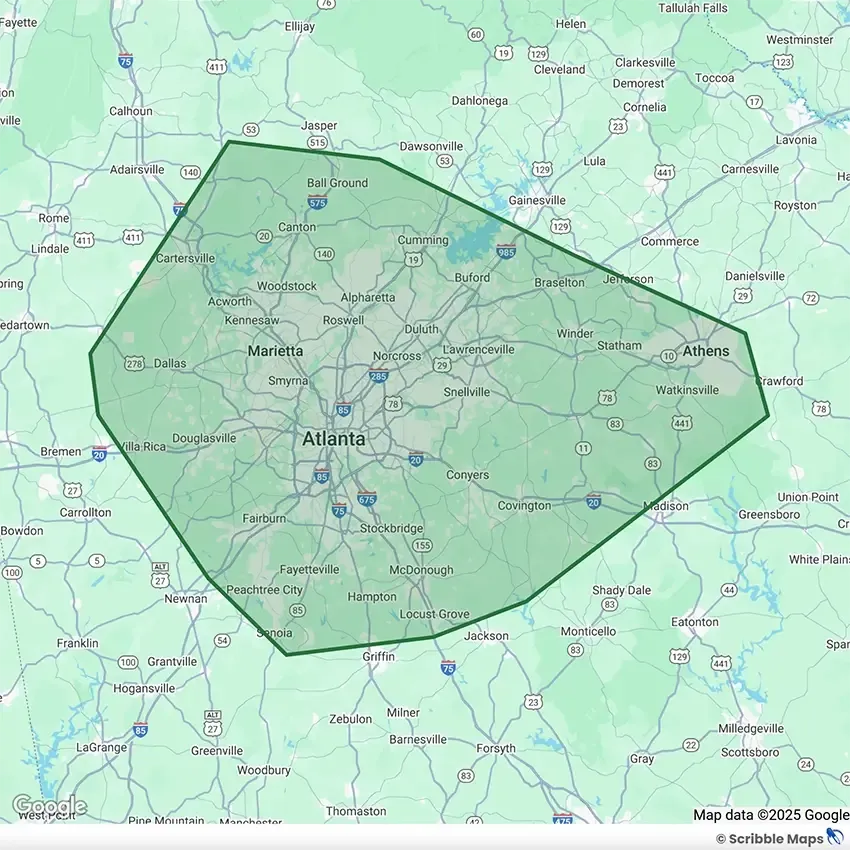
Green Cycle Landscape Management Inc. provides lawn care, fertilization, and weed control services across the Atlanta metro and surrounding communities in Georgia. From Decatur and Marietta to Loganville and Suwanee, our teams serve over 29 cities across 14 counties.